Interview With Dr. Shivasuman Balugoni Author of Inner Child, Outer Strength
In this author interview, Shivasuman discusses Inner Child, Outer Strength, exploring emotional healing, self-awareness, and authentic leadership.on Nov 26, 2026
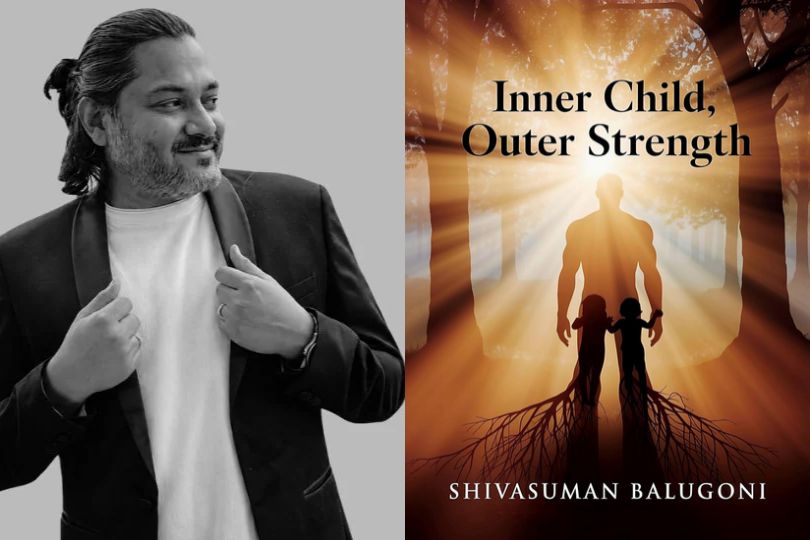
Frontlist: From boardroom to inner child: You have over 20 years of experience in operations, sales and marketing, Business consulting and now you've written a book about healing the inner child. What drew you from the business world to such an intimate, emotional subject?
Shivasuman: After spending more than two decades navigating high-stakes environments in operations, sales, marketing, and business consulting, you inevitably notice a profound pattern. In the boardroom, we are trained to focus entirely on metrics, strategic frameworks, and external performance. However, businesses aren’t run by spreadsheets; they are run by people.
What drew me to this intimate, emotional subject was a stark realization: the vast majority of boardroom conflicts, leadership blind spots, and professional burnouts aren’t actually business problems - they are personal, unhealed emotional problems playing out in a corporate arena. Over the years, I watched brilliant executives build massive external empires while struggling with deep internal emptiness, crippling imposter syndrome, or reactive anger. I began to see how the coping mechanisms we develop as children to survive emotional voids - such as perfectionism, people-pleasing, or hyper-independence - are the exact same traits we carry into our adult careers. We wear them like armor, mistaken for “professional drive.”
My transition into writing Inner Child, Outer Strength wasn’t a departure from the business world, but a deeper evolution of it. I realized that true, sustainable business consulting and leadership development cannot happen solely from the neck up. If we want to build resilient organizations and authentic leaders, we have to look downward into the emotional foundation. Confronting the inner child isn’t a sign of weakness; it is the ultimate administrative cleanup of a leader’s internal operating system.
Frontlist: The personal spark: Was there a particular moment or experience in your own life that made you realise the importance of reconnecting with your inner child?
Shivasuman: Yes, there was a distinct turning point. For years, I operated on a high-octane corporate treadmill, measuring my worth entirely by targets achieved, expansions managed, and professional milestones ticked off. From the outside, it looked like a standard trajectory of success. But internally, the engine was running on empty, fueled by a relentless, exhausting drive that I couldn’t seem to turn off.
The definitive spark came during a period of intense professional pressure. I found myself reacting to a standard corporate setback not with the calibrated logic of an experienced executive, but with an intense, disproportionate wave of anxiety and defensiveness. In that moment of friction, a realization hit me: the person sitting in the boardroom chair navigating that crisis wasn’t the adult professional - it was a wounded, hyper-vigilant child terrified of failure and rejection.
I recognized that my decades-long drive for corporate achievement wasn’t just ambition; it was a deeply ingrained survival strategy carried over from childhood to prove my value and secure safety. I had spent half a lifetime building an ironclad “outer strength” to protect a fragile, unexamined inner core.
Slowing down to look inward and acknowledge that hidden vulnerability wasn’t a choice; it became a necessity for my own survival and well-being. That personal breakthrough completely rewired how I viewed leadership, success, and resilience, and it became the foundational spark for Inner Child, Outer Strength.
Frontlist: Strength and vulnerability: The book's central paradox is that strength comes from accepting pain, not suppressing it. How does that idea challenge the traditional view of leadership and toughness in the corporate world?
Shivasuman: The traditional corporate landscape has long operating under a flawed definition of toughness: the idea that a leader must be an unshakeable, emotionless monolith who absorbs pressure without flinching and never shows a crack. We are taught to view vulnerability as a liability and to lock away personal pain.
Inner Child, Outer Strength directly challenges this outdated model by exposing a critical truth: suppression is not strength; it is merely emotional debt accumulating with high interest.
Here is how this paradox disrupts the traditional view of corporate leadership:
• From Rigid Control to Authentic Resilience: Traditional toughness relies on rigidity. But in a fast-changing business world, rigidity snaps under extreme pressure. True strength is flexible. When a leader accepts their own pain, anxieties, or past wounds, they no longer waste energy trying to project a flawless façade. This self-acceptance builds a grounded, authentic resilience that allows them to navigate crises with calm clarity rather than reactive panic.
• Redefining the “Armor” vs. the “Core”: Traditional corporate culture mistakes the armor for the person. Leaders put on a mask of hyper-independence or aggressive authority to shield their insecurities. By accepting vulnerability, a leader sheds the heavy, artificial armor and strengthens their internal core instead. They don’t need to dominate the room to feel secure.
• Psychological Safety vs. Culture of Fear: A leader who suppresses their own emotions will naturally reject or penalize the emotions of their team, creating a culture of fear and burnout. Conversely, a leader who has confronted their own inner child creates an environment of psychological safety. They understand that admitting a mistake or asking for help isn’t a sign of weakness - it is the prerequisite for innovation, trust, and true collaboration. Ultimately, authentic leadership isn’t about being bulletproof. It is about being human enough to connect, secure enough to listen, and strong enough to lead from a place of wholeness rather than defense.
Frontlist: The title: Why Inner Child, Outer Strength? What do you mean by the bridge between the fragile inner child and the resilient adult?
Shivasuman: The title Inner Child, Outer Strength captures the direct, causal relationship between internal healing and external resilience. It serves as a reminder that you cannot build a sustainable, high-performing exterior if the foundation beneath it is fractured.
The Meaning Behind the Title
• The Fragile Inner Child: This represents the repository of our earliest emotional memories, unmet needs, and unhealed wounds. When we experience rejection, criticism, or emotional neglect in youth, that “fragile child” stays frozen in time. As adults, whenever we feel threatened, overlooked, or stressed, this fragile part takes the wheel, causing us to overreact, retreat, or act out of fear.
• The Resilient Adult: This is our conscious, grounded, and logical self. It is the part of us capable of emotional regulation, strategic thinking, objective decision-making, and deep empathy.
The Bridge Between Them
Most people try to operate strictly as the “adult,” completely cutting off or ignoring the child within. They treat their vulnerabilities like a weakness to be eradicated. But cutting off the child doesn’t make it go away; it just makes it operate from the shadows, sabotaging our careers and relationships through subconscious patterns like imposter syndrome or perfectionism.
The “bridge” is the process of integration. Building this bridge means the adult self consciously reaches back to acknowledge, validate, and “reparent” the fragile inner child.
Traditional Modern Approach
The Integrated Bridge Approach Suppression: Burying fear and anxiety under a façade of professional “toughness.” Reaction: Allowing the wounded inner child to dictate adult choices (e.g., lash out at a colleague).
VS
Acknowledgment: Identifying a trigger, pausing, and recognizing that a childhood fear has been activated. Regulation: The adult self reassures the inner child (“We are safe, we can handle this challenge”), taking control of the action.
When this bridge is firmly established, your external power is no longer a fragile mask worn for self-defense. Instead, it becomes a genuine, unshakeable outer strength rooted in complete internal alignment and peace.
Frontlist: Not a quick fix: You describe the book as 'not a book of prescriptions or quick fixes.' Why did you choose a narrative, reflective approach over a step-by-step self-help format?
Shivasuman: I intentionally chose a narrative, reflective approach because the human psyche is an ecosystem to be understood, not a machine to be optimized.
The modern self-help landscape is saturated with “five-step formulas” and “hacks” for mental well-being. While a step-by-step format works wonderfully for assembling office furniture or executing a sales pipeline, it fundamentally fails when applied to deep-seated emotional wounds.
Here is why a prescriptive format doesn’t work for inner child healing, and why reflection is necessary:
• Formulas Create More Perfectionism: The executives and high-achievers who read my book are already master tacticians. If I gave them a rigid checklist, they would treat their emotional healing like another corporate KPI. They would try to “perfect” the steps, check the boxes, and ironically use the process to fuel the exact same hyper-achieving, perfectionist defenses they need to let go of.
• Healing is Non-Linear: A step-by-step format implies that emotional growth moves cleanly from Point A to Point B. In reality, healing is a spiral. You might uncover a childhood wound today, feel a sense of release tomorrow, and find yourself triggered by the exact same issue next month. A prescriptive format makes readers feel like they are “failing” if they loop back. A narrative approach prepares them for the real, messy rhythm of growth.
• Prescriptions Bypass Personal Truth: A prescription tells you what to do, which keeps you in your analytical mind. A narrative approach, however, holds up a mirror. By sharing raw, reflective stories and exploring the nuances of human vulnerability, I invite readers to drop their guard. It allows them to say, “I recognize myself in that story,” which naturally triggers their own unique insights.
True, lasting external strength cannot be copy-pasted from an author’s checklist. It only emerges when a reader slows down, engages in deep self-reflection, and uncovers their own internal truths.
Frontlist: The exercises: Can you walk us through one of the reflective exercises in the book and explain how a reader might begin using it?
Shivasuman: One of the fundamental reflective practices in the book is an exercise called The Trigger Blueprint. It is designed to help you catch yourself in moments of intense workplace friction or personal stress, pause, and map that adult reaction back to its original childhood source. High-achieving professionals often pride themselves on logic, yet a single critical comment from a manager or a delayed email from a client can cause an instant, disproportionate spike of panic or rage. This exercise helps you decode that reaction.
How to Begin Using “The Trigger Blueprint”
You can start using this tool by sitting down with a journal immediately after a highstress event, following these four sequential prompts:
• Step 1: Isolate the Adult Event (The Present) Write down exactly what happened objectively, stripping away assumptions.
• Example: “My business partner critiqued my presentation style in front of the team.”
• Step 2: Track the Somatic and Emotional Echo (The Feeling) Notice what happened to your body and your internal dialogue in that exact moment. Did your chest tighten? Did your throat close up? What did the emotional voice say?
• Example: “I felt a burning sensation in my stomach. The voice in my head immediately said, ‘You’ve messed up, they think you’re incompetent, you don’t belong here.’”
• Step 3: Track the Historic Origin (The Child) Close your eyes, breathe, and ask yourself a simple question: “When is the very first time I felt this exact sensation of being publicly exposed, small, or deemed inadequate?” Let your memory drift back to your school days, family dynamic, or early youth.
• Example: “I remember being ten years old, making a mistake during a school recitation, and the teacher sighing while my classmates laughed. I felt naked, unprotected, and deeply ashamed.”
• Step 4: The Adult Intervention (The Bridge) This is where you consciously build the bridge. As a resilient adult, you step in to parent that memory. You write down a statement that separates past survival from present reality.
• Example: “The ten-year-old child was helpless and associated a mistake with total rejection. But I am an adult now. This feedback is just business data; it does not diminish my core worth or safety.” Why This Exercise Works By mapping your reactions this way, you realize that the intensity of your adult stress is almost always an accumulation of old, unhealed history. The moment you see the blueprint clearly, the trigger loses its grip over you. You stop reacting like an endangered child and start responding like a grounded leader.
Frontlist: Childhood wounds at work: As a sales head and corporate consultant who has led teams, have you seen unresolved childhood patterns show up in workplace behaviour, such as fear of failure, people-pleasing or difficulty trusting?
Shivasuman: How can leaders address this? Throughout my career as a sales head and corporate consultant, I have seen these patterns play out daily. The corporate ladder is filled with highly competent adults who are secretly being driven by the unresolved fears of their childhood. Unresolved childhood patterns don’t stay at home; they sit right next to us in the boardroom. Here is how they typically manifest in workplace behavior:
• The Perfectionist (Fear of Failure): This stems from a childhood where love, approval, or safety were conditional upon high achievement. In the workplace, this professional struggles to delegate, suffers from severe imposter syndrome, and experiences analysis paralysis because making a mistake feels like an existential threat.
• The Yes-Man (People-Pleasing): This often traces back to a child who had to manage the unpredictable emotions of a parent or caregiver. At work, this manifests as an inability to say no, a total avoidance of healthy conflict, and eventual severe burnout because they prioritize keeping the peace over operational efficiency.
• The Micromanager (Difficulty Trusting): This behavior usually originates from an unstable or chaotic early environment where the child felt unprotected. As an adult leader, they cope by trying to control every variable, hyper-managing their team, and treating every minor shift in strategy as a potential betrayal.
How Leaders Can Address This
As a leader, your job is not to act as a therapist for your team. You cannot heal their childhood wounds. However, you can design a leadership environment that stops triggering those wounds and instead fosters emotional growth.
Here is a strategic framework for leaders to address these behaviors:
1. Separate Performance from self worth – De-escalate the fear of failure by explicitly decoupling a person’s mistakes from their value to the team. When a project fails, pivot immediately to a blameless post-mortem. Shift the language from “Why did you fail?” to “What is the data teaching us?”
2. Reward Boundary Setting – Combat people-pleasing by actively encouraging team members to push back. When an employee says, “I don’t have the bandwidth for this assignment without letting down another client,” praise their clarity. Make saying “no” a sign of professional competence, not weakness.
3. Build Radical Predictability – Ease trust issues through extreme clarity and consistency. Wounded inner children panic in ambiguity. Provide clear KPIs, transparent communication, and predictable emotional reactions. If a leader is volatile, the team spends all their energy managing the leader’s mood instead of doing their work. Ultimately, the best tool a leader has is their own self-awareness. When a team member acts out, throws a tantrum, or shuts down out of fear, an emotionally aware leader doesn’t react with anger. They recognize that they are looking at a defense mechanism, pause, and respond from a place of adult stability.
Frontlist: Ecopreneurship and healing: You are also an ecopreneur at Net Nest Eco Solutions. Do you see a connection between caring for the environment and caring for our inner selves?
Shivasuman: Yes, I see a profoundly deep, systemic connection between the two. My work as an ecopreneur at Net Nest Eco Solutions and my focus on inner child healing are actually two sides of the exact same coin. Both are centered around transitioning from a model of extraction and exploitation to a model of regeneration and sustainability.
The connection between caring for the environment and caring for our inner selves operates across three core dimensions:
1. The Mirror of Exploitation
The climate crisis and the modern mental health crisis stem from the very same root cause: the myth of infinite growth without restoration.
• The Environment: For centuries, industrial systems have treated the Earth as an endless source of raw materials, pulling out resources, ignoring the waste, and pushing the ecosystem to the brink of collapse.
• The Self: We treat our bodies and minds the exact same way. Driven by unhealed inner child wounds—such as the need to prove our worth through constant achievement—we exploit our own energy. We extract productivity, ignore internal warning signs, and push ourselves into severe burnout. How we treat the Earth is a direct reflection of how we treat ourselves. You cannot deeply respect and protect external nature if you are actively warring against your own human nature.
2. The Power of “Eco-Somatic” Grounding
Inner child work requires us to slow down, leave our racing analytical minds, and drop back into our physical bodies (somatic healing). There is no faster way to ground a deregulated nervous system than by connecting with the natural world. Nature operates on a completely different timeline than the corporate world. Trees don’t rush their growth, and ecosystems don’t panic when seasons change. When we care for the environment—whether through sustainable business practices, conservation, or simply spending mindful time in nature—we naturally absorb that rhythm. It sends a profound message to a hyper-vigilant inner child: “There is a larger order here. You are safe, and you don’t have to control everything.”
3. Moving from Cleaning Up to Healing Roots
At Net Nest Eco Solutions, our focus is on building sustainable architectures that don’t just patch up environmental damage, but fundamentally change how we interact with energy and waste.
This mirrors the core thesis of Inner Child, Outer Strength. Real change doesn’t happen by just sweeping the surface or masking the symptoms with quick fixes. True sustainability—whether it is an eco-friendly business model or an authentic life—requires us to dig deep into the foundation, clean out the old toxic waste, and nurture the roots so that future growth can happen naturally.
Caring for the planet and caring for the inner self are mutually reinforcing acts of stewardship. When we heal ourselves, we stop consuming and acting out of a place of internal emptiness, which naturally relieves pressure on the world around us. And when we protect the environment, we preserve the very sanctuary that allows human beings to heal.
Frontlist: Who is this book for? Is it meant for people who are already on a healing journey, or for readers, especially professionals, who have never explored their emotional past?
Shivasuman: Inner Child, Outer Strength was written intentionally to serve as a universal entry point, meaning it is built for both groups, but it addresses them in entirely different ways. If I had to narrow down the core audience, the book is especially tailored for professionals, high-achievers, and corporate leaders who have never explored their emotional past. Here is how the book serves readers at different stages of their personal journey:
1. For the Corporate Professional (The Unexplored Past)
Many brilliant leaders are masters at navigating complex business strategies but remain complete strangers to their own internal emotional landscapes. They often dismiss concepts like “inner child work” or “healing” as too soft, abstract, or irrelevant to the bottom line. This book is designed specifically to break down those defenses. By using the language of the boardroom—discussing operations, team dynamics, metrics, and professional triggers—it acts as a pragmatic, jargon-free bridge. It meets highachievers exactly where they are, helping them realize that looking into their past isn’t a sign of weakness, but a critical upgrade to their professional capabilities, decision-making, and leadership resilience.
2. For the Experienced Seeker (Already on a Healing Journey)
For individuals who are already familiar with therapy, mindfulness, or emotional self-care, this book offers a fresh, real-world application. People on a healing journey sometimes struggle to integrate their personal insights into their hard-hitting, competitive professional lives. They might feel centered on a meditation mat but completely lose their balance during a tense performance review or a high-pressure corporate restructuring. This book provides them with the concrete framework needed to apply emotional healing directly to real-world corporate challenges, helping them maintain their boundaries and inner alignment in competitive environments.
The Ultimate Goal
Ultimately, the book is for anyone who is tired of wearing a heavy mask of external perfectionism to hide internal exhaustion. Whether you are a senior executive who has never spent a moment looking inward, or someone actively working on mental well-being, Inner Child, Outer Strength serves as a practical, compassionate roadmap to trading an artificial façade for a genuine, unshakeable core.
Frontlist: Reader takeaway: If a reader remembers only one thing from the book, what do you hope it will be? And is there another book on the horizon?
Shivasuman: If a reader remembers only one core insight from Inner Child, Outer Strength, I hope it is this: Your current adult stress is rarely just about the present moment; it is almost always the echo of an unhealed past.
When you experience a sudden, intense flash of corporate anxiety, perfectionism, or defensive anger, it isn’t a sign that you are a weak professional. It is simply a signal that a vulnerable, younger part of you feels threatened in that room. The moment you stop using heavy professional armor to hide that child, and instead choose to step in and lead them with adult compassion, your external power transforms. True, unshakeable strength is built by accepting your vulnerabilities, not by suppressing them.
Is there another book on the horizon?
Yes, absolutely. The journey of writing Inner Child, Outer Strength opened up a fascinating secondary pathway that demands further exploration. My next project, which I am actively developing and almost finishing, focuses directly on the intersection of past and present corporate sales practices. The Name of the Book is “The Rowdy Salesman”
From as early as 2000s It was a psychological war zone across all sales ventures where we used words as weapons, empathy as a trap, and sheer, unadulterated pressure to force a decision. We were “rowdy.” We were aggressive, uncompromising, and relentlessly focused on the close. If you didn’t buy, it wasn’t because you couldn’t afford it; it was because we hadn’t broken through your defenses yet.
But the world changed. The “boiler room” tactics that made millions in the early 2000s started hitting a brick wall. Customers grew smarter, laws grew tighter, and the rowdy salesman had to adapt or go extinct.
This book is the raw, unfiltered story of that transformation. It is a journey from the wild, high-pressure street fights of old-school timeshare closing to the sophisticated, high-conviction, professional psychology of modern selling.
Post a comment
0 comments

Trending Posts










Recent Post




Related Post


 (1).jpg)



© 2026 - Frontlist - News and Updates of Publishing Industry, Book Reviews, Education News, Author Interviews, and Videos.. All Rights Reserved.
Sorry! No comment found for this post.