Amritsar’s History Revealed Through Rare Books and Manuscripts
Guru Nanak Dev University showcases rare books, manuscripts and newspapers tracing Amritsar’s 450-year history and Punjab’s rich cultural heritage.on Nov 26, 2026
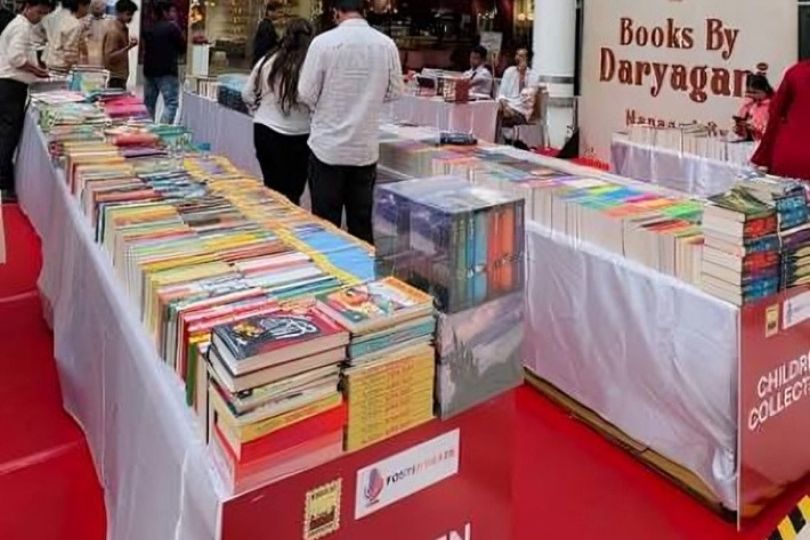
History unfolded through the pages of rare books, old newspapers and archival manuscripts at Guru Nanak Dev University’s Bhai Gurdas Library, where an exhibition offered visitors a glimpse into Amritsar’s rich and layered past.
Titled Amritsar 450: Exhibition of Rare Books and Manuscripts, the exhibition marks the upcoming 450th foundation anniversary of the historic city, which falls in October 2027. As part of the university’s commemorative celebrations, the initiative brings together historical records that trace Amritsar’s religious heritage, political movements, personalities and cultural evolution.
For visitors, the exhibition was more than a display of old publications. It was an opportunity to revisit history through documents that have survived generations, offering a glimpse into the events, ideas and people that shaped Punjab and Amritsar.
Among the notable exhibits were historical publications on Maharaja Duleep Singh dating back to 1890, History of the War in Afghanistan (1843), documenting the First Anglo-Afghan War (1839–1842), and Religious Magazine (1835).
The exhibition also featured Guide to the Darbar Sahib (1905), Report Shri Darbar Sahib (1929) and Tawarikh Shri Amritsar by eminent Sikh historian Giani Gian Singh. These publications offer valuable accounts of Amritsar’s foundation and the historical and religious significance of Sri Harmandir Sahib.
Visitors could also explore the Punjab District Gazetteer: Amritsar District (1947), historical records relating to Gurdwara Shahid Ganj Sahib and Gurdwara Panja Sahib, and publications chronicling significant moments in Punjab’s political history.
Among the particularly compelling exhibits were editions of Gadar Hindustan (1930), a Punjabi newspaper published in San Francisco and associated with the Ghadar Party. Founded by Indian expatriates in the United States, the revolutionary movement sought to end British colonial rule in India. Through political commentary, news and patriotic poetry, the newspaper became part of the wider literary and political voice of the freedom struggle.
Another rare publication on display was Khoon de Sohile (1920), a 306-page volume published by Akal Agency, Lahore. Documenting atrocities during Punjab’s Martial Law period in 1919, the book offers an archival account of one of the most turbulent chapters of colonial Punjab’s history.
The exhibition was inaugurated by Registrar Prof. (Dr.) KS Chahal, who commended the library team for bringing together such an important collection. He encouraged students, researchers and visitors to engage with these historical resources and recognise their value in understanding the past.
The university’s Amritsar 450 celebrations will also extend beyond written history to showcase Punjab’s living heritage. A folk art exhibition will feature phulkari, jewellery, traditional costumes, household objects and crafts, alongside creations by students from the Department of Apparel and Textile Technology.
Together, these exhibitions celebrate Amritsar not merely as a city shaped by history, but as a living cultural landscape where heritage, memory, literature and tradition continue to find meaning in the present.
Post a comment
0 comments

Trending Posts







Recent Post





Related Post







© 2026 - Frontlist - News and Updates of Publishing Industry, Book Reviews, Education News, Author Interviews, and Videos.. All Rights Reserved.
Sorry! No comment found for this post.