India’s Creative Industry Pushes for Stronger Copyright Laws in the Age of AI
Film, music and publishing leaders urge stronger copyright laws to protect creators as AI reshapes India’s ₹2.78 trillion creative economy.on May 06, 2026
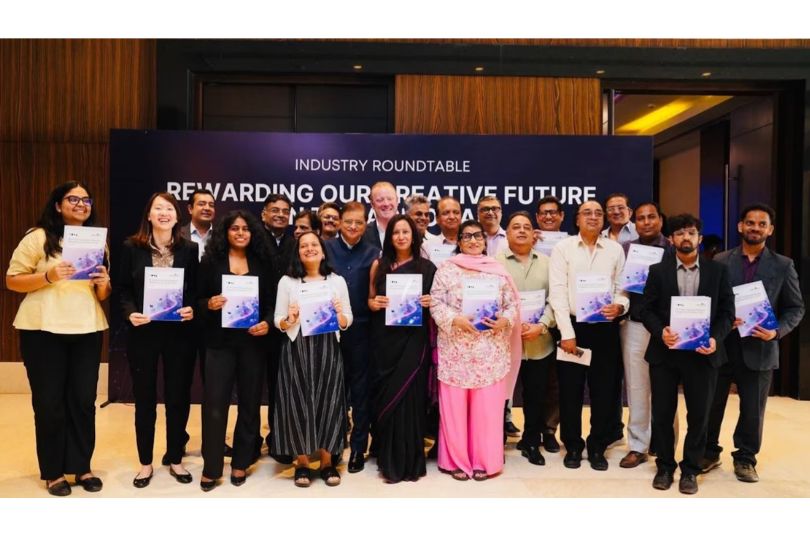
India’s creative sector, from filmmakers to publishers, is making its stand clear against the growing influence of artificial intelligence. In a string of roundtable sessions conducted in major Indian cities recently, industry leaders gathered with policymakers to discuss ways to ensure that creators’ original work will be protected in the age of AI.
At stake is more than just money; it’s the livelihood of thousands of people and their right to own and control the creative products they create. According to a report by EY titled “Stories, Scale and Impact,” the creative sector in India is huge and worth about ₹2.78 trillion, accounting for more than 2.8 million jobs directly. The Motion Picture Association and Deloitte also noted that India’s screen industries had a total economic output of ₹5.1 lakh crore in 2024.
However, there is still one fundamental question that everyone needs to discuss: should the AI companies be granted unrestricted rights to use copyrighted material at rates determined by the government?
Instead, there is a push for a more balanced strategy that rests on three pillars: consent from the rightsholder, voluntary licensing, and enforcement of copyright laws within digital mediums. For them, the issue is not one of fighting AI, but of guiding its development.
The recently launched paper, entitled AI in the Creative Industry: Deepening the Value Chain, authored by Koan Advisory along with Creative First, showcases the ways in which Indian artists are leveraging AI technologies while retaining full autonomy over their intellectual property. Innovation and ownership can go hand in hand.
In the New Delhi roundtable session, which was moderated by Sanjeev Sanyal, Principal Economic Adviser to the Prime Minister, it became apparent that any regulatory strategy that may infringe upon copyright laws will pose serious challenges to the industry. The industry stressed that predictability in regulation would prove crucial for making India the content capital of the world.
As James Cheatley from the Motion Picture Association noted, "stronger copyright laws are not an obstacle to innovation; they are the bedrock upon which innovation thrives," especially with the emergence of AI technologies.
Similarly, Abhay Sinha from the Film Federation of India cautioned against making "Digital India" into "an environment of piracy where digital products can be used without any consent or permission." According to him, content is much more than just data. It is intellectual property created through time, energy, and imagination.
It was evident from these interactions that there is recognition among the participants of the discussion that artificial intelligence has come to stay. Moreover, there are endless possibilities in this field, which can revolutionize the way we live.
However, this must not happen at the cost of those whose work goes into creating content consumed by the AI. As the discussions with the government continue, as seen during the India AI Impact Summit, things might shape the creative world in this country in the coming years.
Post a comment
0 comments

Trending Posts
.jpg)
.jpg)

.jpeg)

.jpg)
Recent Post
.jpg)
.jpg)




Related Post





© 2026 - Frontlist - News and Updates of Publishing Industry, Book Reviews, Education News, Author Interviews, and Videos.. All Rights Reserved.
Sorry! No comment found for this post.