You’re Second to None, Andy!: Book Review
Discover You’re Second to None, Andy! by Malvika Bahl, a children's book inspired by the Bhagavad Gita that teaches confidence, resilience, emotional intelligence, and a growth mindset.on Oct 27, 2026
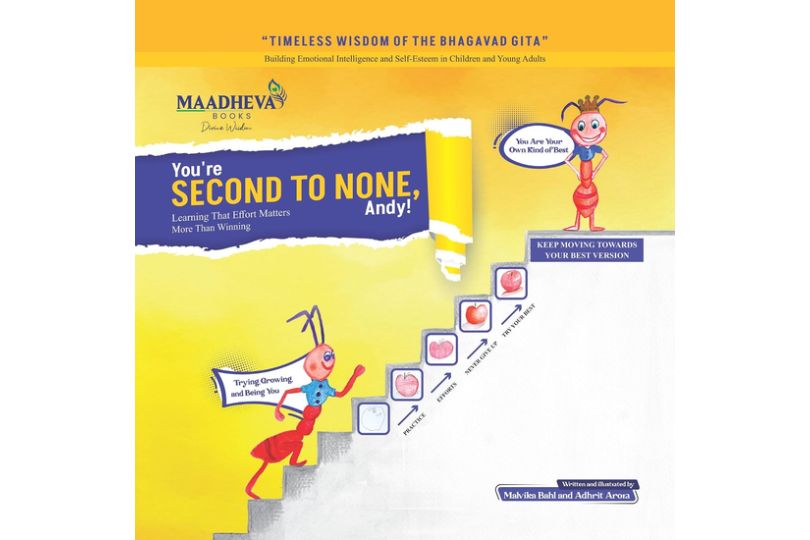
You’re Second to None, Andy!: A Children’s Book on Confidence, Resilience, and the Wisdom of the Bhagavad Gita
Children grow up in a world where marks, medals, rankings, and achievements can easily become measures of self-worth. From examinations and sports competitions to auditions and performances, young people often face pressure to win, perform well, and compare themselves with others. ** You’re Second to None, Andy! by Malvika Bahl** offers a thoughtful alternative, encouraging children to focus on effort, personal growth, and self-belief rather than the constant pursuit of comparison and external validation.
Designed for children aged seven and above, this self-help book uses engaging storytelling to introduce essential life skills such as perseverance, consistency, resilience, emotional intelligence, and gratitude. Drawing inspiration from the teachings of Lord Krishna in the Bhagavad Gita, it presents a valuable message for young readers: success is not defined solely by the outcome of an effort, but also by the sincerity, courage, and commitment with which one approaches a challenge.
The book's central idea is captured in its title. Every child possesses individual strengths and potential, and their worth does not depend on being better than someone else. By helping children understand this distinction, Malvika Bahl encourages them to approach both success and failure with confidence, balance, and a willingness to learn.
Book Summary
At its heart, You’re Second to None, Andy! is about helping children develop a healthier relationship with achievement. Rather than presenting life as a competition in which only the winner matters, the book encourages young readers to recognise the value of effort, consistency, and personal improvement.
The book introduces children to qualities such as grit, perseverance, resilience, and wisdom through accessible storytelling. These lessons are intended to help them face difficult situations without losing confidence in themselves. Whether a child is preparing for an examination, participating in a sports event, performing on stage, or confronting an unfamiliar challenge, the book offers a perspective that places personal growth above comparison.
An important aspect of the book is its emphasis on the difference between effort and outcomes. Children may work hard and still experience disappointment. They may succeed at something without being the best among their peers. The book encourages them to understand that neither situation determines their fundamental worth.
Inspired by the Bhagavad Gita, particularly the teaching in Chapter 2, Verse 47, the book highlights the importance of performing one's duties sincerely without becoming overly attached to the results. For young readers, this wisdom becomes a practical lesson in concentrating on what they can control: their preparation, attitude, effort, and willingness to learn.
The book also explores gratitude, acceptance, self-esteem, and equanimity. These values help children approach life's changing circumstances with greater emotional balance. Rather than allowing failure to define them or success to make them overly dependent on praise, they are encouraged to remain grounded and continue growing.
Ultimately, You’re Second to None, Andy! seeks to help children recognise that they can strive for excellence without measuring their value against the achievements of others.
What Makes You’re Second to None, Andy! Different?
Effort Matters More Than Winning
One of the book's most important messages is that effort deserves recognition independently of the final result. In competitive environments, children can begin to believe that winning is the only meaningful outcome. This belief can make ordinary setbacks feel like personal failures.
Bahl offers a more balanced perspective. The emphasis is on doing one's best, learning from experience, and continuing to improve. This approach does not discourage ambition; instead, it encourages children to pursue their goals without allowing the outcome to determine how they see themselves.
The message is particularly relevant before examinations, competitions, and performances, when pressure to succeed can overshadow the value of preparation and learning.
Introducing the Bhagavad Gita to Young Readers
The book draws inspiration from the Bhagavad Gita, bringing its teachings into the context of childhood experiences. The principle of focusing on one's actions rather than becoming attached to their fruits offers a meaningful way to discuss achievement, disappointment, and personal responsibility.
For children, this teaching can be understood as a reminder to prepare sincerely, give their best effort, and accept that not every outcome will be within their control.
By connecting spiritual wisdom with everyday challenges, the book creates an accessible bridge between an enduring philosophical tradition and the emotional realities of growing up.
Building Confidence Without Comparison
Children often develop ideas about their abilities by observing how they perform relative to their peers. While comparison can sometimes motivate improvement, it can also weaken self-esteem when children begin to equate their worth with rankings or recognition.
You’re Second to None, Andy! encourages a different foundation for confidence. Children are invited to recognise their individuality, value their own progress, and understand that another person's success does not diminish their potential.
This is a useful message for young readers learning to navigate classrooms, friendships, competitions, and other environments where differences in performance are visible.
Learning to Handle Success and Failure
The book does not focus only on coping with disappointment. It also encourages children to approach success with balance and humility.
Failure can provide opportunities to learn, while success can be appreciated without becoming a source of superiority or dependence on external praise. The concept of equanimity helps bring these ideas together, encouraging children to remain steady through changing circumstances.
This balanced understanding of achievement can help young readers develop a more sustainable approach to challenges, one that values learning and personal development over short-lived validation.
Themes Explored in You’re Second to None, Andy!
Growth Mindset and Continuous Improvement
A growth mindset encourages children to view abilities as something they can develop through effort, learning, and practice. Rather than treating mistakes as evidence that they are incapable, they can begin to see them as part of the learning process.
The book's emphasis on perseverance and consistency supports this perspective. Children are encouraged to continue working towards their goals, learn from experiences that do not go as planned, and recognise improvement as an achievement in itself.
This message can be especially valuable when young learners encounter subjects, activities, or skills that initially seem difficult.
Emotional Intelligence and Resilience
Emotional intelligence involves recognising emotions, understanding how they affect behaviour, and responding to experiences thoughtfully. For children, these abilities can be important when dealing with disappointment, pressure, excitement, and uncertainty.
By focusing on emotional balance and resilience, the book encourages young readers to develop a steadier response to challenges. Instead of allowing one unsuccessful attempt to undermine their confidence, they can learn to reflect, recover, and try again.
Such lessons can support children as they develop the emotional skills needed to navigate academic, social, and personal experiences.
Self-Esteem and Individual Worth
A child's self-esteem should not depend entirely on examination results, trophies, or praise. When achievements become the primary measure of worth, children may struggle to feel confident during periods of difficulty.
The book's title reinforces the idea that every child has inherent value. Being unique does not mean being superior to others; it means recognising one's individuality without constantly seeking validation through comparison.
This distinction encourages confidence rooted in self-understanding rather than competition.
Gratitude and Acceptance
Gratitude encourages children to recognise what they have, appreciate support, and acknowledge positive experiences. Acceptance, meanwhile, helps them recognise circumstances that cannot always be changed.
Together, these values offer a more balanced way to approach everyday life. Children can continue striving towards their goals while learning to appreciate their present circumstances and respond constructively when outcomes differ from expectations.
Equanimity in Success and Failure
Equanimity is a central concept in the book's philosophical foundation. It refers to maintaining inner balance when circumstances change, whether the experience brings success, disappointment, praise, or criticism.
For a child, this does not mean suppressing emotions or pretending not to care. Rather, it means learning that a difficult result does not define the future, just as a successful result does not determine one's entire identity.
Inspired by the Bhagavad Gita, the book encourages children to give their best while developing a healthier relationship with outcomes.
A Helpful Read Before Exams and Competitions
One of the book's practical strengths is its relevance to situations that commonly create anxiety for children. Examinations, sports matches, stage performances, auditions, and competitions can place young people under pressure to meet expectations.
You’re Second to None, Andy! offers a framework for approaching these experiences with a more balanced mindset. Its emphasis on effort encourages children to concentrate on preparation rather than becoming overwhelmed by the possibility of failure.
The book also reinforces the idea that one result cannot define a child's abilities or future. A disappointing performance can become an opportunity to learn, while a successful one can be appreciated without making comparison the basis of confidence.
For parents and educators, these ideas can provide a useful starting point for conversations about achievement, mistakes, motivation, and self-worth. The book's lessons extend beyond examinations, encouraging children to approach a wide range of life experiences with courage and perspective.
Writing Style and Educational Appeal
Malvika Bahl combines storytelling with lessons in personal development, making You’re Second to None, Andy! accessible to its intended young audience. The book focuses on concepts that children can encounter in their own lives rather than relying solely on abstract discussions of character or philosophy.
Its emphasis on values such as perseverance, gratitude, resilience, and emotional balance gives the book an educational dimension. The connection with the Bhagavad Gita adds a spiritual foundation, while the practical focus makes the central ideas relevant to contemporary childhood experiences.
The book's intended audience includes children aged seven and above, along with parents and educators who want to nurture confidence and emotional wellbeing. Its themes can also encourage adults to reconsider how they speak about achievement and failure with young people.
Rather than treating success as a simple matter of winning, the book promotes a more thoughtful understanding of what it means to do well: making a sincere effort, learning from experience, and continuing to grow.
About the Author
Malvika Bahl holds an M.Tech degree and works as an Assistant Professor, author, illustrator, and devoted bibliophile. She is also the founder of MAADHEVA Books, a children's book brand focused on nurturing emotionally healthy, resilient, and wise young minds through stories rooted in character, values, and inner growth.
Combining her academic background with her creative interests and concern for child development, Bahl creates illustrated books intended to encourage emotional intelligence, a growth mindset, self-esteem, gratitude, and courage. Her work draws inspiration from enduring wisdom, including the teachings of the Bhagavad Gita, presenting philosophical ideas in ways that are accessible to young readers.
Alongside her work in children's literature, Bahl has authored technical papers published through platforms and organisations including IEEE Xplore and Elsevier. Her academic contributions also include work associated with the International Conference on Advances in Engineering and Technology (ICAETR-2014) and the International Journal of Scientific Progress and Research.
Through MAADHEVA Books, she aims to encourage children to approach success with humility, face challenges with resilience, and develop lives guided by wisdom, compassion, and purpose.
Who Should Read You’re Second to None, Andy!?
This book may be particularly suitable for:
- Children aged seven and above who are developing confidence and independence.
- Young readers preparing for examinations, competitions, auditions, or sports events.
- Children who struggle with fear of failure or pressure to outperform their peers.
- Parents who want to encourage healthy self-esteem and emotional intelligence.
- Teachers and educators seeking to discuss perseverance, resilience, and personal responsibility.
- Families interested in introducing children to the practical wisdom of the Bhagavad Gita.
- Readers looking for children's books that encourage gratitude, acceptance, and a growth mindset.
It may also be useful as a starting point for conversations about how to respond to mistakes, appreciate effort, and celebrate progress without relying on comparison.
Conclusion
You’re Second to None, Andy! by Malvika Bahl presents an encouraging message for children growing up in an environment where achievement and competition can easily become measures of self-worth. Through its focus on effort, perseverance, emotional intelligence, and inner balance, the book invites young readers to discover a healthier way of approaching success and failure.
Its connection with the Bhagavad Gita gives the message a timeless philosophical foundation: do your duty sincerely, focus on the effort you can give, and avoid allowing the result to determine your sense of worth. By translating this principle into lessons relevant to childhood, Bahl encourages children to face challenges with greater confidence and resilience.
For parents and educators, the book offers an opportunity to reinforce the idea that children need not win every competition to recognise their own potential. They can learn from mistakes, appreciate their progress, and pursue their goals without losing sight of their individuality.
For young readers, its central message is simple and reassuring: your worth is not decided by a ranking, a result, or someone else's achievement. You can keep learning, keep trying, and grow into your best self—because you are truly second to none.
Post a comment
0 comments

Trending Posts










Recent Post







Related Post







© 2026 - Frontlist - News and Updates of Publishing Industry, Book Reviews, Education News, Author Interviews, and Videos.. All Rights Reserved.
Sorry! No comment found for this post.