Sacred Wisdom by Krishna Dhan Das: Book Review
Discover Sacred Wisdom by Krishna Dhan Das, a practical guide to applying timeless Indian scriptures to self-mastery, relationships, and spiritual growth.on Oct 23, 2026
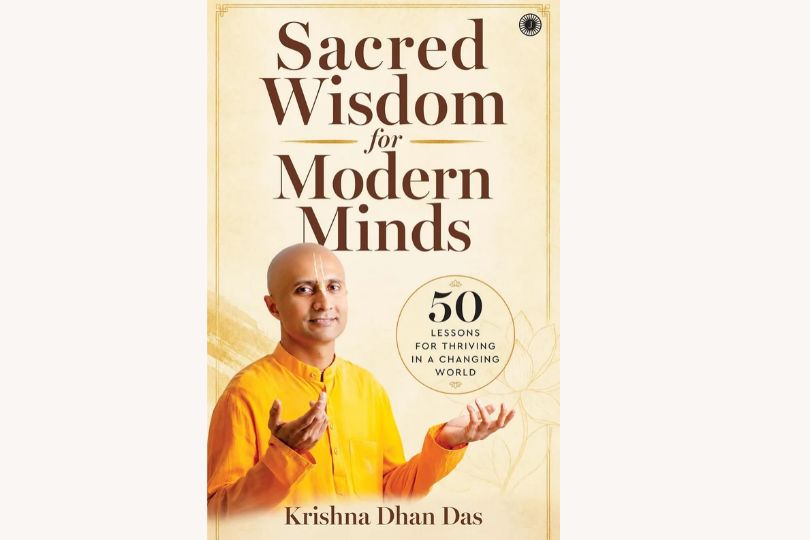
Sacred Wisdom: Timeless Vedic Teachings for Modern Life by Krishna Dhan Das
In a world shaped by constant demands, competing priorities, and the pressure to achieve more, finding clarity and inner stability can be challenging. People often look for practical ways to manage time, strengthen relationships, overcome setbacks, and discover a deeper sense of purpose. Yet many of the questions that define modern life have been explored for centuries in India's spiritual and philosophical traditions. Sacred Wisdom: Sacred Wisdom for Modern Minds by Krishna Dhan Das brings these enduring teachings into conversation with the realities of contemporary living.
Drawing from classical texts such as the Bhagavad Gita, the Upanishads, the Hitopadesha, the Mahabharata, and the Srimad Bhagavatam, the book presents fifty verses that offer guidance on personal development, relationships, discipline, and spiritual growth. Rather than treating ancient wisdom as something distant or confined to religious study, Krishna Dhan Das explores its relevance to the choices people make in everyday life.
Structured around three journeys-inward, outward, and upward-the book offers readers a framework for understanding themselves, relating meaningfully to others, and developing a deeper connection with purpose. Its approach combines Sanskrit verses, translations, explanations, contemporary examples, and reflective takeaways to make traditional teachings accessible to modern readers.
Book Summary
Sacred Wisdom explores how India's classical spiritual traditions can inform the challenges and decisions of contemporary life. Its foundation rests on the idea that ancient wisdom remains relevant because questions of human behaviour, emotional balance, responsibility, relationships, and purpose continue to shape people's lives.
The book brings together fifty verses drawn from respected Indian scriptures and classical works. Each verse serves as a starting point for reflection, with its meaning explained in a way that connects traditional knowledge to present-day circumstances. The aim is not simply to introduce readers to scriptural teachings, but to help them consider how these insights might influence their habits, decisions, and relationships.
The book's three-part structure provides a clear progression through different dimensions of personal growth.
The Inward Journey focuses on self-mastery, encouraging readers to develop discipline, focus, resilience, and inner clarity. It invites them to look inward, understand their responses, and recognise the importance of cultivating a steady and thoughtful approach to life's challenges.
The Outward Journey turns attention to relationships and interactions with others. Through themes such as empathy, communication, and service, it explores how personal values can shape the way individuals contribute to their families, workplaces, and communities.
The Upward Journey considers spiritual growth, devotion, purpose, and a broader understanding of life. It encourages readers to look beyond immediate concerns and reflect on the principles that give their choices greater meaning.
Together, these journeys present personal development as a connected process. Self-understanding influences relationships, while meaningful relationships and a sense of purpose can contribute to a more considered way of living.
What Makes Sacred Wisdom Different?
1. Ancient Scriptures Meet Contemporary Challenges
One of the book's central strengths is its effort to connect classical Indian teachings with situations that modern readers encounter. Texts such as the Bhagavad Gita and the Upanishads contain philosophical and spiritual insights that have influenced generations of readers. However, understanding their relevance to present-day decisions can require explanation and context.
Krishna Dhan Das approaches this challenge by presenting selected verses alongside translations, clear explanations, and contemporary examples. This structure helps readers engage with the underlying ideas without needing extensive prior knowledge of Sanskrit or Indian philosophical traditions.
The book's emphasis on practical application also makes its subject matter relevant beyond formal spiritual study. Questions of discipline, time management, focus, resilience, and communication arise in educational, professional, and personal settings. By exploring these themes through classical sources, the book invites readers to consider how established wisdom might inform their responses to modern pressures.
2. A Structured Approach to Personal Growth
Personal development can sometimes feel like a collection of unrelated goals: improving concentration, managing emotions, building better relationships, or finding a stronger sense of direction. Sacred Wisdom brings these areas together through its three journeys.
The inward dimension emphasises the individual's relationship with the self. The outward dimension considers how personal development influences interactions with others. The upward dimension explores the connection between everyday life and spiritual purpose.
This structure gives the book a coherent direction. Instead of presenting its fifty verses as isolated pieces of advice, it places them within a broader framework for thoughtful living. Readers can approach growth as a process that involves self-awareness, social responsibility, and a willingness to look beyond immediate concerns.
3. Practical Reflection Rather Than Abstract Philosophy
Spiritual and philosophical texts can contain ideas that feel difficult to apply when encountered without explanation. The format of Sacred Wisdom addresses this challenge by combining the original Sanskrit verse with its translation, an accessible explanation, contemporary examples, and a reflective takeaway.
This approach gives readers several ways to engage with each teaching. The verse introduces the traditional source, the translation makes its meaning more accessible, and the explanation provides context. Contemporary examples then help connect the idea to familiar circumstances, while the reflective takeaway encourages readers to consider its relevance to their own lives.
The result is a reading experience designed to move beyond the acquisition of knowledge. It encourages readers to pause and reflect on how an idea might influence their choices and conduct.
Themes Explored in Sacred Wisdom
Self-Mastery and Inner Discipline
The inward journey highlights the importance of understanding and guiding oneself. Discipline, focus, and resilience are central to navigating a world full of distractions, responsibilities, and uncertainty.
Self-mastery does not necessarily mean eliminating difficulties or controlling every circumstance. It involves developing greater awareness of one's responses and making more deliberate choices. The book's engagement with classical wisdom offers a framework for considering how discipline and inner steadiness can support this process.
For students, professionals, and individuals pursuing personal goals, these ideas are particularly relevant. Progress often depends not only on ability but also on consistency, patience, and the capacity to remain focused when circumstances become difficult.
Time Management and Focus
Time management is a practical concern for people balancing work, study, family responsibilities, and personal ambitions. Yet effective use of time is connected to more than scheduling tasks. It also requires clarity about priorities and the ability to direct attention towards what matters.
By including time management and focus among its themes, Sacred Wisdom connects personal effectiveness with a wider process of self-development. Readers are encouraged to consider the relationship between their intentions, daily habits, and long-term aims.
This perspective can make time management less about constant productivity and more about making conscious choices. It invites reflection on whether everyday activities support meaningful goals or simply respond to immediate demands.
Resilience and Emotional Stability
Setbacks and uncertainty are unavoidable parts of life. The ability to respond thoughtfully rather than react impulsively can influence how individuals navigate difficult circumstances.
Resilience, as explored within the book's broader focus on personal growth, is relevant to both individual well-being and responsible decision-making. Inner stability can help people approach challenges with greater perspective, while reflection can create space between an emotional response and a considered action.
The book's use of classical teachings provides a context for examining these questions. Its practical format encourages readers to consider how wisdom can inform their attitudes towards difficulty, change, and personal responsibility.
Empathy and Meaningful Relationships
Personal growth is not limited to an individual's achievements or inner life. The way people communicate, listen, respond, and contribute to the lives of others is equally important.
The outward journey explores themes such as empathy, communication, and service. These areas are central to healthy relationships because they require people to look beyond their immediate preferences and consider the needs and experiences of others.
In families, educational environments, workplaces, and communities, meaningful communication depends on a willingness to understand different perspectives. By placing relationships within its broader framework of wisdom, the book highlights the connection between personal values and everyday conduct.
Service, Purpose, and Spiritual Growth
The upward journey broadens the discussion from individual development and social relationships to questions of purpose and devotion. It invites readers to consider what gives their lives direction and how their choices might reflect values beyond personal gain.
Service offers one way of connecting individual abilities with the well-being of others. Purpose, meanwhile, can help people evaluate their decisions against a wider set of principles rather than immediate rewards alone.
The book's engagement with India's spiritual traditions places these themes within a long-standing philosophical context. Readers interested in exploring the relationship between everyday responsibilities and spiritual growth may find this dimension particularly meaningful.
Writing Style and Reading Experience
Sacred Wisdom follows a structured, accessible format that combines traditional source material with explanation and reflection. Each chapter's progression from Sanskrit verse to translation, interpretation, contemporary example, and takeaway provides a consistent way for readers to engage with the material.
This format can serve readers with different levels of familiarity with Indian scriptures. Those already acquainted with the source texts can revisit selected teachings through a practical lens, while newcomers have a clear entry point into their ideas.
The three-journey structure also helps organise a wide range of themes without losing sight of the book's central purpose. Self-discipline, communication, resilience, service, and devotion may appear to address different aspects of life, but they are connected through the larger question of how wisdom can shape everyday choices.
Rather than presenting ancient teachings as detached historical material, Krishna Dhan Das brings attention to their potential relevance in contemporary circumstances. The book is therefore suited to readers who want to engage with spiritual ideas while considering their practical implications.
About the Author: Krishna Dhan Das
Krishna Dhan Das holds a Bachelor's degree in Mechanical Engineering from Pune University. He began his career as a lecturer at K. K. Wagh College of Engineering, Education & Research Institute, before working for more than five years as an Industrial Engineer at Hindustan Aeronautics Limited's Aircraft Manufacturing Division in Nashik.
Inspired by a calling to study and share Vedic wisdom, he stepped away from his engineering career to pursue full-time study and dissemination of the teachings of India's spiritual traditions. For more than two decades, he has researched ancient texts and worked to make their insights accessible to contemporary readers.
He is the Founder and Director of the Samruddhi School of Leadership, a training initiative focused on mentoring teenagers in character-building, leadership, and life skills. He also conducts seminars and corporate symposiums for industries, organisations, educational institutions, and professional forums across India, combining scriptural knowledge with practical applications.
His earlier books include Get Set Go – Student's Success Handbook, published by Vishwakarma Publications, which has sold more than 6,000 copies, and Launch Your Life to the Next Level, published by Srishti Publishers, which won the PVLF Best Self-Help Book of the Year Award in 2024. Through his writing, teaching, and speaking, he seeks to connect ancient knowledge with the demands of contemporary life.
Who Should Read Sacred Wisdom?
Sacred Wisdom may appeal to a wide range of readers, including:
- Readers interested in Indian philosophy and spirituality who want to explore teachings from the Bhagavad Gita, Upanishads, and other classical sources.
- Students and young adults seeking perspectives on discipline, focus, resilience, and character development.
- Working professionals and leaders interested in applying principles of self-mastery, communication, empathy, and purpose to everyday responsibilities.
- Personal-growth readers looking for a structured approach to reflection and the development of more conscious habits.
- Spiritual seekers who want to consider how devotion, service, and inner clarity can contribute to a meaningful life.
Its combination of traditional texts and contemporary examples makes the book suitable for readers who appreciate spiritual inquiry alongside practical guidance.
Conclusion
Sacred Wisdom by Krishna Dhan Das explores the continuing relevance of India's classical spiritual traditions in a world shaped by modern pressures and changing priorities. Through fifty verses drawn from texts including the Bhagavad Gita, the Upanishads, the Hitopadesha, the Mahabharata, and the Srimad Bhagavatam, the book examines self-mastery, relationships, resilience, service, and spiritual growth.
Its three journeys—inward, outward, and upward—offer a framework for connecting personal discipline with meaningful relationships and a deeper sense of purpose. The combination of Sanskrit verses, translations, explanations, contemporary examples, and reflective takeaways makes the material approachable for readers who want to engage with ancient wisdom in practical ways.
Ultimately, Sacred Wisdom presents thoughtful living as an ongoing process of learning and reflection. For readers seeking to bring greater clarity to their decisions, strengthen their relationships, and explore the connection between personal growth and spiritual understanding, the book offers an invitation to rediscover enduring teachings through the questions and responsibilities of modern life.
Post a comment
0 comments

Trending Posts










Recent Post




Related Post








© 2026 - Frontlist - News and Updates of Publishing Industry, Book Reviews, Education News, Author Interviews, and Videos.. All Rights Reserved.
Sorry! No comment found for this post.