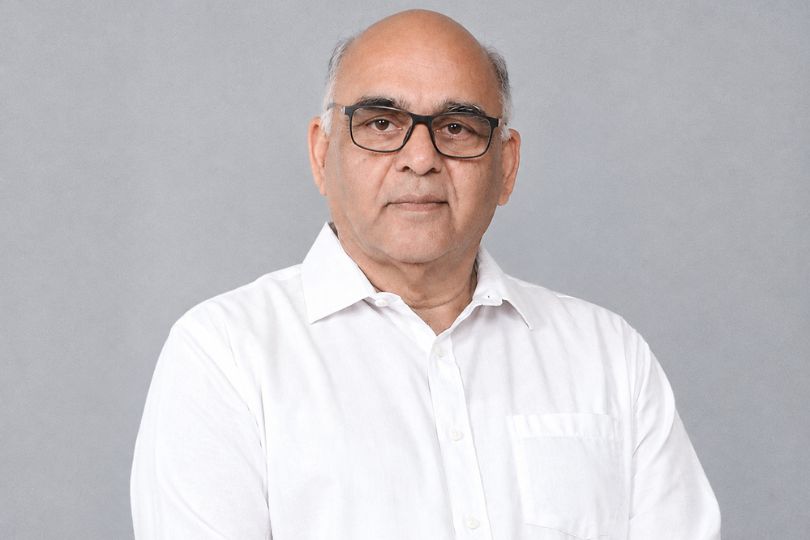
Interview with Ramesh Mittal President of FIP
Ramesh highlights the enduring value of books, the impact of technology and AI, and the need to protect creativity while promoting reading and diverse voices in India’s evolving publishing landscape.on Apr 08, 2026
.jpg)
Frontlist: As the President of the Federation of Indian Publishers, how do you see the role of books in shaping knowledge and culture in today’s fast-paced digital world?
Ramesh: Books remain essential contributors to the development of global knowledge and culture. Despite the rise of digital interventions, the published word maintains a unique sense of authenticity and consistency for the reader.
Frontlist: Our World Book and Copyright Day theme is “Why Books Still Matter.” In your opinion, what makes books irreplaceable even in the age of short-form content and social media?
Ramesh: Books will remain valuable for decades, centuries, and even millennia as long as they are preserved in collections or libraries. In contrast, most short-form digital content remains available only for a limited period. Moreover, many digital formats depend on specific technologies, and whenever technological changes occur, the content often needs to be restructured to remain compatible with new systems.
Frontlist: The publishing industry is witnessing rapid technological changes. How is technology transforming the way books are produced, distributed, and consumed?
Ramesh: Technological advancements in publishing are helping the book industry in many ways. They assist not only in the production of books but also in their distribution and accessibility. Print-on-Demand allows publishers to print copies according to demand, thereby reducing the cost of storing and managing inventory. Social media and other digital platforms help publishers and authors reach readers more effectively, allowing them to order books online from major online retailers or directly from publishers, which helps keep selling and purchasing costs relatively low.
Frontlist: Artificial Intelligence is increasingly influencing creative industries. How do you see AI impacting the publishing world, both as an opportunity and a challenge?
Ramesh: Artificial Intelligence can be both a powerful tool and a potential threat for the publishing world. Much depends on how it is used. If existing published content is copied or misused and presented as a new creation, it amounts to piracy. However, when AI is used responsibly to assist and enhance the ideas of a creator, it can help produce meaningful and innovative content.
Frontlist: What are some of the biggest challenges publishers in India are currently facing, especially in the digital era?
Ramesh: Piracy and unauthorized copying—including the sharing of complete books in PDF format—pose significant challenges in the digital environment and negatively impact the revenues of authors, publishers, and other stakeholders. Therefore, a balanced copyright framework is essential to address these issues while also considering the evolving role of AI and text-and-data mining technologies.
Frontlist: India has a rich diversity of languages and cultures. How can publishers ensure that regional voices and stories continue to thrive?
Ramesh: India is privileged to have a rich diversity of languages and cultures. Each language and region possesses a vast body of literature and cultural heritage. When these literary works are translated into different Indian languages, the richness of our literature multiplies. Cultural events organized across different states can also promote understanding and appreciation of the diverse traditions within the country.
Frontlist: What steps can publishers, educators, and institutions take to encourage stronger reading habits among younger generations?
Ramesh: Tocultivate stronger reading habits among young people, book exhibitions, reading events, and literary discussions should be organized throughout the country. Schools could encourage reading by assigning at least one book to each student every month, which they would read within a time frame. A weekly discussion session could then allow students to share what they have learned from the book. The education system should also recognize and encourage reading development by awarding marks based on well-designed evaluation parameters. Television programs focused on book discussions involving young participants could further inspire others to read and participate.
Frontlist: Looking ahead, what trends do you believe will shape the future of publishing over the next decade?
Ramesh: The future of books in India is resilient, inclusive, and globally relevant. Print will continue to coexist with digital and audio formats. Indian publishing will increasingly highlight local voices with global resonance, supported by technological innovation, policy reforms, and international collaboration. Books will remain central to education, democracy, creativity, and cultural exchange, and India will play a significant role in shaping this future.
Post a comment
0 comments

Trending Posts
.jpg)
.jpg)


.jpeg)


.jpg)
Recent Post
.jpg)
.jpg)





Related Post






© 2026 - Frontlist - News and Updates of Publishing Industry, Book Reviews, Education News, Author Interviews, and Videos.. All Rights Reserved.
Sorry! No comment found for this post.